About Commercial Effluent Treatment Plant
PRIMARY TREATMENT ZONE (PHYSICAL & MECHANICAL)
|
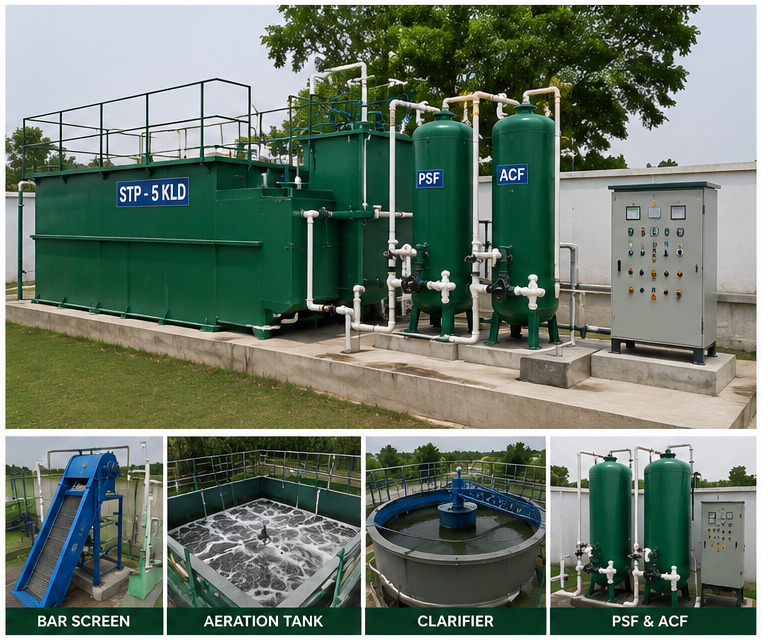
Bar Screen Chamber
|
Function: Intercepts large floating solids, rags, plastics and debris to protect downstream pumps from clogging.
Specifications:
Material: SS-304 / MS Epoxy Coated
Clear Spacing: 10-25 mm
Manual or Automatic Mechanical Rake Type
|
|
Oil & Grease Trap
|
Function: Separates free floating oil, fats and scum using specific gravity differences.
Specifications:
Multi-baffle wall mechanism
MOC: Civil RCC Structure / MS Fabricated with Epoxy
Mechanical Skimmer / Scraper
|
|
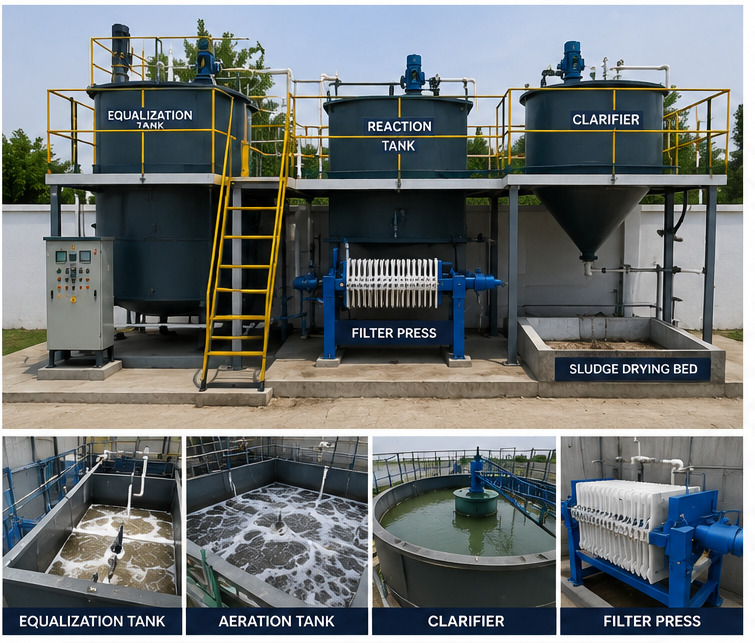
Equalization Tank
|
Function: Balances flow rate and organic loading (pH, COD, BOD).
Specifications:
Retention Time: 8-12 Hours
Coarse Bubble Air Diffuser System
Connected to Air Blower
|
CHEMICAL TREATMENT ZONE (PHYSICO-CHEMICAL)
|
Flash Mixer / Neutralization
|
Function: Rapid mixing of coagulants (Alum/PAC) and pH adjustment chemicals.
Specifications:
Agitator Speed: 300-400 RPM
Impeller: SS-316 / High Grade Polymer
Automatic pH Dosing Pump
|
|
Flocculation Tank
|
Function: Slow mixing to form larger settleable flocs.
Specifications:
Slow Speed Paddle Agitator
Speed: 20-40 RPM (VFD Controlled)
Retention Time: 20-30 Minutes
|
|
Primary Clarifier / Tube Settler
|
Function: Gravity separation of flocs and suspended solids.
Specifications:
PVC/PP Tube Settler Media Pack
Inclination: 60 deg
Hopper Bottom Sludge Collection Pit
|
SECONDARY TREATMENT ZONE (BIOLOGICAL)
|
Aeration Tank (MBBR / ASP)
|
Function: Aerobic digestion of dissolved organic pollutants (BOD & COD).
Specifications:
Fine Bubble Membrane Diffusers (Silicone/EPDM)
Target DO: 2.0-3.0 mg/L
MBBR Media Filling Ratio: 30-50%
|
|
Secondary Clarifier Tank
|
Function: Separates biological sludge from treated water.
Specifications:
Sludge Scraper Mechanism
Return Activated Sludge (RAS) Pumps
|
TERTIARY TREATMENT ZONE (FILTRATION & POLISHING)
|
Pressure Sand Filter (PSF)
|
Function: Removes fine suspended solids and reduces turbidity.
Specifications:
Vessel: FRP / MS Epoxy Lined
Media: Pebbles, Gravel, Quartz Sand
Multi-port Backwash Valve
|
|
Activated Carbon Filter (ACF)
|
Function: Removes color, odor, chlorine and trace organics.
Specifications:
Granular Activated Carbon (>900 mg/g Iodine Value)
Sized to match PSF Flow Rate
|
|
Disinfection Unit
|
Function: Eliminates pathogenic microorganisms before discharge or reuse.
Specifications:
Sodium Hypochlorite Dosing System
OR
Inline Stainless Steel UV Sterilizer
|
SLUDGE MANAGEMENT SYSTEM
|
Filter Press / Decanter
|
Function: Dewaters primary and secondary sludge into dry sludge cakes.
Specifications:
Polypropylene (PP) Filter Plates
High Density Filter Cloths
Hydraulic Closing Mechanism (Manual / Motorized)
Sludge Collection Tray
|
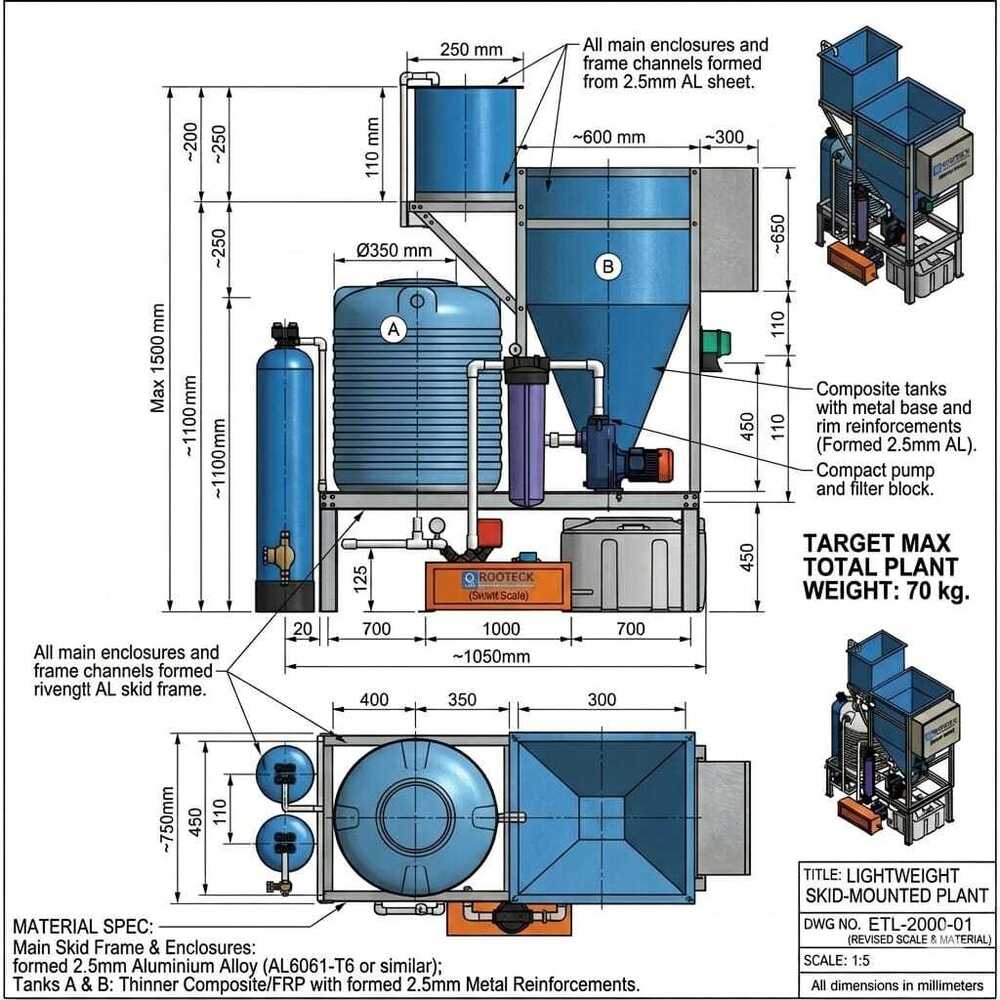
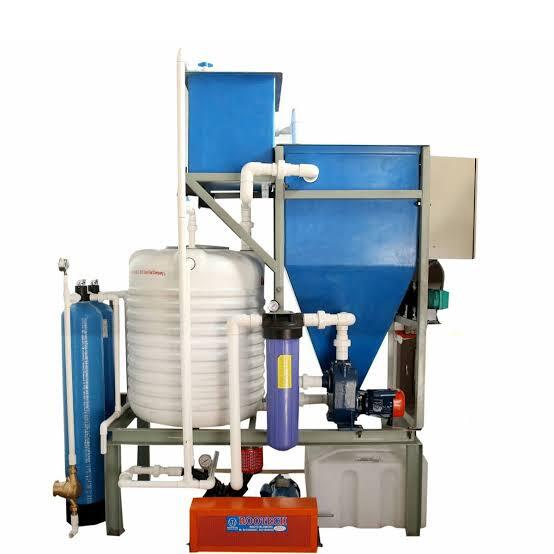
Experience top-ranking water purification with our Commercial Effluent Treatment Plant, meticulously engineered for inestimable effectiveness and consistent regulatory compliance. Highlighted by its multi-stage process (primary, secondary, tertiary), this featured system achieves excellent performance with inlet BOD up to 400 mg/l and an outlet BOD of less than 30 mg/l. Designed for durability, it delivers a wondrous service life of up to 15 years, minimal sludge production, and non-hazardous discharge. Crafted in mild steel, steel, or FRP, and equipped with advanced technologies like MBR and MBBR, it suits capacities from 5 to 500 KLD-offering customization, low noise, and automatic operation for industrial applications across India.
Specific and General Application Features
The Commercial Effluent Treatment Plant is tailored for both specific and general industrial water treatment needs. Its robust construction from mild steel, steel, or FRP ensures reliability in diverse applications. With its fully automatic operation and advanced membrane technologies, this system streamlines effluent purification for a broad range of industries, providing low-sludge and non-hazardous discharge. Whether you require containerized or prefabricated installation, this plug & play solution adapts seamlessly to any usage context requiring stringent pollution control.
Sample Policy & Supply and Packaging Details
We offer express shipping and an export market-driven sample policy, ensuring prospective buyers receive representative samples quickly and reliably. Our supply ability meets both small and large-scale demands, with extensive production capabilities supporting capacities from 5 KLD up to 500 KLD. Each plant is packaged securely for domestic and international transit, ensuring optimal protection during shipment. Custom packaging is available upon request to meet specific logistical or compliance requirements, reinforcing our commitment to excellent service and international standards.
FAQ's of Commercial Effluent Treatment Plant:
Q: How does the Commercial Effluent Treatment Plant process industrial water?
A: The plant treats industrial effluent through three main stages: primary (removal of solids), secondary (biological treatment with MBR/MBBR), and tertiary (advanced purification) to ensure compliance with stringent pollution norms.
Q: What are the benefits of using this effluent treatment system?
A: Users benefit from low sludge production, inestimable service life (up to 15 years), robust pollution control compliance, and fully automated, low-noise operation that meets varied industrial requirements.
Q: When should industries consider installing this treatment plant?
A: Industries generating wastewater with BOD levels up to 400 mg/l should install this plant to achieve outlet BOD below 30 mg/l and ensure adherence to CPCB and Pollution Control Board norms.
Q: Where can the Commercial Effluent Treatment Plant be installed?
A: The plant is available in containerized, prefabricated, and custom-built formats, making it suitable for installation at various industrial sites across India and for export abroad.
Q: What specific materials are used in manufacturing this equipment?
A: We feature top-quality materials like mild steel, steel, and FRP to ensure durability, safety, and adaptability in demanding effluent treatment environments.
Q: How does automation enhance the operation of this plant?
A: Its automatic operation minimizes user intervention, increases efficiency, and supports consistent water quality, optimizing operation for both large and small industrial setups.




 Send Inquiry
 Send Inquiry

