About Effluent Treatment Plant
PRIMARY TREATMENT ZONE (PHYSICAL & MECHANICAL)
|
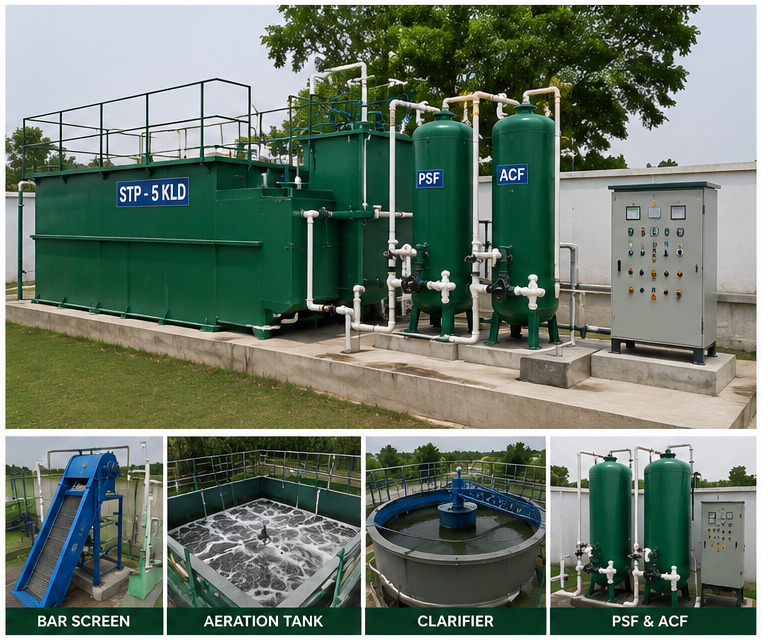
Bar Screen Chamber
|
Function: Intercepts large floating solids, rags, plastics and debris to protect downstream pumps from clogging.
Specifications:
Material: SS-304 / MS Epoxy Coated
Clear Spacing: 10-25 mm
Manual or Automatic Mechanical Rake Type
|
|
Oil & Grease Trap
|
Function: Separates free floating oil, fats and scum using specific gravity differences.
Specifications:
Multi-baffle wall mechanism
MOC: Civil RCC Structure / MS Fabricated with Epoxy
Mechanical Skimmer / Scraper
|
|
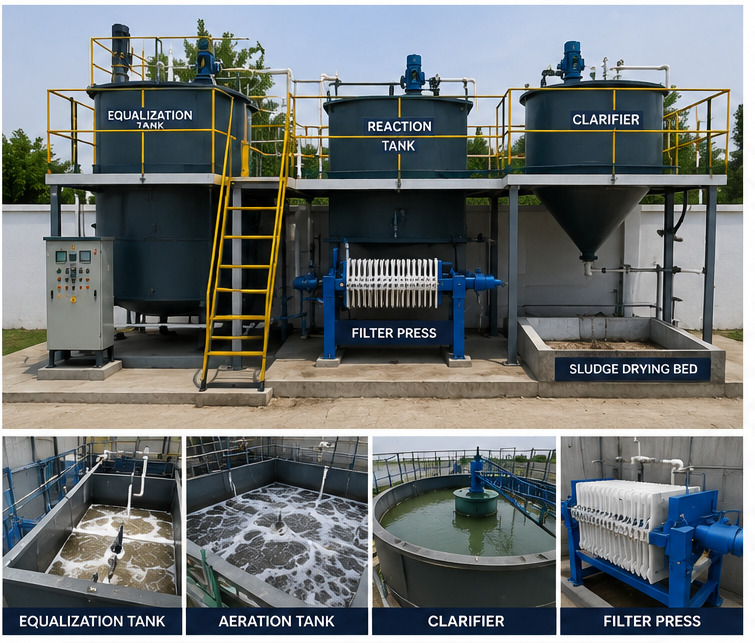
Equalization Tank
|
Function: Balances flow rate and organic loading (pH, COD, BOD).
Specifications:
Retention Time: 8-12 Hours
Coarse Bubble Air Diffuser System
Connected to Air Blower
|
CHEMICAL TREATMENT ZONE (PHYSICO-CHEMICAL)
|
Flash Mixer / Neutralization
|
Function: Rapid mixing of coagulants (Alum/PAC) and pH adjustment chemicals.
Specifications:
Agitator Speed: 300-400 RPM
Impeller: SS-316 / High Grade Polymer
Automatic pH Dosing Pump
|
|
Flocculation Tank
|
Function: Slow mixing to form larger settleable flocs.
Specifications:
Slow Speed Paddle Agitator
Speed: 20-40 RPM (VFD Controlled)
Retention Time: 20-30 Minutes
|
|
Primary Clarifier / Tube Settler
|
Function: Gravity separation of flocs and suspended solids.
Specifications:
PVC/PP Tube Settler Media Pack
Inclination: 60 deg
Hopper Bottom Sludge Collection Pit
|
SECONDARY TREATMENT ZONE (BIOLOGICAL)
|
Aeration Tank (MBBR / ASP)
|
Function: Aerobic digestion of dissolved organic pollutants (BOD & COD).
Specifications:
Fine Bubble Membrane Diffusers (Silicone/EPDM)
Target DO: 2.0-3.0 mg/L
MBBR Media Filling Ratio: 30-50%
|
|
Secondary Clarifier Tank
|
Function: Separates biological sludge from treated water.
Specifications:
Sludge Scraper Mechanism
Return Activated Sludge (RAS) Pumps
|
TERTIARY TREATMENT ZONE (FILTRATION & POLISHING)
|
Pressure Sand Filter (PSF)
|
Function: Removes fine suspended solids and reduces turbidity.
Specifications:
Vessel: FRP / MS Epoxy Lined
Media: Pebbles, Gravel, Quartz Sand
Multi-port Backwash Valve
|
|
Activated Carbon Filter (ACF)
|
Function: Removes color, odor, chlorine and trace organics.
Specifications:
Granular Activated Carbon (>900 mg/g Iodine Value)
Sized to match PSF Flow Rate
|
|
Disinfection Unit
|
Function: Eliminates pathogenic microorganisms before discharge or reuse.
Specifications:
Sodium Hypochlorite Dosing System
OR
Inline Stainless Steel UV Sterilizer
|
SLUDGE MANAGEMENT SYSTEM
|
Filter Press / Decanter
|
Function: Dewaters primary and secondary sludge into dry sludge cakes.
Specifications:
Polypropylene (PP) Filter Plates
High Density Filter Cloths
Hydraulic Closing Mechanism (Manual / Motorized)
Sludge Collection Tray
|
The Effluent Treatment Plant (ETP), with its rarefied technology and unassailable engineering, stands out as a highly recommended solution for discerning industries. Designed for inlet BOD levels of 300-500 mg/L, it efficiently delivers an outlet BOD of less than 30 mg/L. Distinguished features such as PLC-based control panels, semi-automatic CIP cleaning, and robust sludge dewatering cater to modern operational demands. With capacities up to 200 KLD and advanced MBBR, membrane, and activated sludge integrations, pick yours to ensure value, compliance, and environmental stewardship in every industrial application.
Versatile Industrial Application & Methodology
Engineered for superior performance, this ETP is suitable for industrial wastewater treatment, reuse, and compliant discharge. The application method integrates pretreatment (equalization, coagulation, flocculation), mixed bed bioreactor, and chemical clarification, followed by advanced post-treatment (UV, carbon filter). Designed for continuous, automatic operation, this plant is ideal for manufacturing units, textile mills, food processing, and chemical industries requiring sustainable effluent management with high flow rate and reliability.
Certifications, Supply Capacity & Domestic Reach
Backed by relevant certifications and strict domestic compliance, our ETP is supplied throughout India with reliable freight and well-coordinated shipment processes. Main domestic markets include metropolitan and industrial zones, ensuring broad availability and fast exchange support. With an extensive supply capability and prompt service, clients receive on-time delivery and consistent assistance for installation, maintenance, and urgent technical needs.
FAQ's of Effluent Treatment Plant:
Q: How does the ETP remove contaminants from industrial wastewater?
A: The Effluent Treatment Plant uses a combination of pretreatment (equalization, coagulation, and flocculation), MBBR biological processing, chemical treatment, and clarification, followed by advanced post-treatment steps such as UV disinfection and carbon filtration to remove contaminants and reduce BOD levels effectively.
Q: What are the main benefits of using this ETP for my industry?
A: This ETP delivers distinguished performance, achieving significant reduction in BOD, automatic operation, and low noise levels. Users benefit from flexible installation, reliable sludge management, and eco-friendly water reuse or discharge, enhancing compliance with environmental standards and adding value to your enterprise.
Q: Where can the Effluent Treatment Plant be installed?
A: The plant is suitable for installation in diverse industrial settings, including chemical factories, textiles, food processing, manufacturing units, and any site requiring robust effluent management. Its containerized or prefabricated design offers easy integration into existing infrastructure.
Q: What types of support and service are provided after installation?
A: Onsite and remote technical support is available, ensuring swift troubleshooting, operational guidance, and maintenance. Our exchange and service network is responsive, covering the main domestic market for rapid assistance when needed.
Q: How is sludge handled in this ETP process?
A: The ETP includes a dedicated sludge dewatering system, efficiently managing and minimizing sludge volume. This results in easier disposal, reduced handling costs, and compliance with environmental regulations.
Q: When should I consider upgrading to a plant of this capacity?
A: Consider upgrading when your industrial wastewater output approaches 50-200 KLD, when regulatory standards tighten, or when seeking to reuse treated water to reduce operational costs and environmental impact.




 Send Inquiry
 Send Inquiry

